
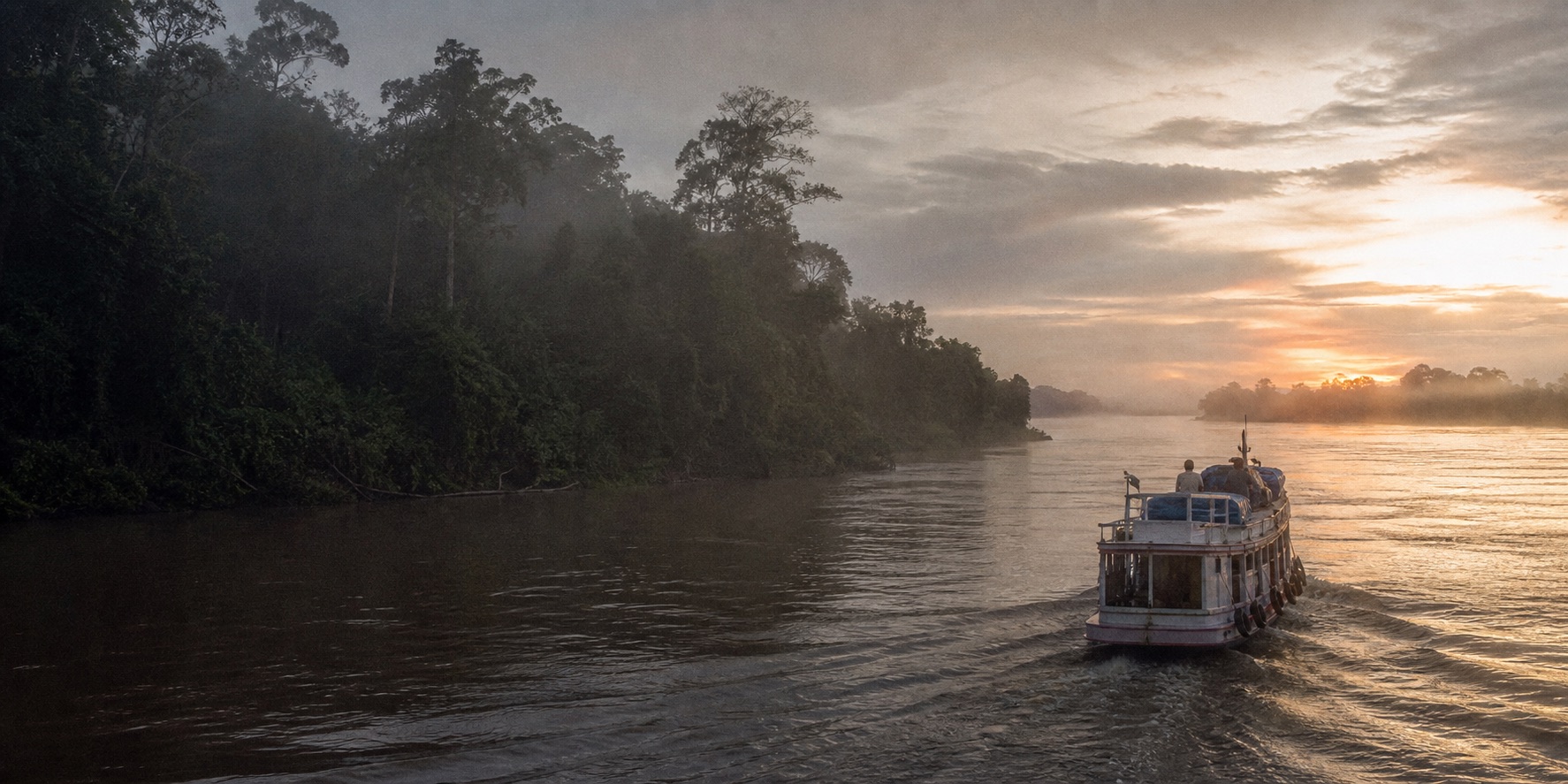
The mistake is treating every Amazon trip as a cheaper or dearer version of the same thing. Manaus is a major Brazilian city. Iquitos is an isolated Peruvian gateway. A public riverboat is transport used by local passengers, not an expedition cruise missing the champagne.
Before comparing cabins, decide what you want to remember. Is it wildlife with a guide who can find and explain it? The scale of a working river? Several days without a road? Or simply a first encounter with the forest that fits into a wider South America trip?
For a first Amazon trip, use Manaus as a gateway and spend the money on a carefully vetted river or lodge operator. Choose a long public-boat passage only if ordinary river travel—not wildlife density or comfort—is the actual point.
Manaus: the practical first doorway
Manaus makes the Amazon leg easier to contain. It is a metropolis with an airport, hotels and a remarkable cultural anchor in the Teatro Amazonas. Brazil’s official tourism site describes it as a gateway for river trips, the Meeting of the Waters, freshwater beaches and forest stays. That mix matters: a delayed or weather-affected excursion does not leave you with nothing to do.
The famous Meeting of the Waters is close enough to fit into a short stay, but it is not the forest immersion promised by a lodge brochure. A two- or three-night trip farther from the city earns its place by providing guides, smaller boats, night excursions and time on tributaries. Ask exactly how far the base is from Manaus and how much of the advertised duration is transfer.
Choose Manaus if
- this is your first Amazon journey and you want a robust gateway;
- you value a city day before and after the river;
- you want several operators and accommodation levels to compare.
Iquitos: commit to the river earlier
Iquitos has no road connection to the rest of Peru’s national road network; most international visitors arrive by air and leave the city by boat for forest journeys. That isolation changes the rhythm. It can make the Amazon feel less like an excursion from a city, but it also makes missed connections and operator quality more consequential.
Pacaya-Samiria National Reserve is the compelling name in many itineraries. Do not compare two trips only by whether both mention it. Compare the actual route, water level, travel time, guide ratio, boat size, included excursions and how many hours are spent inside the area that attracted you.
Choose Iquitos if
- the Peruvian Amazon is the centre of the trip rather than an add-on;
- you want a lodge or expedition itinerary designed around guided wildlife observation;
- you can leave recovery time around domestic flights and boat transfers.
A passenger riverboat: when the route is the experience
A multi-day Brazilian passenger boat can be one of the world’s great transport experiences. It can also be hot, noisy, crowded, basic and difficult to verify from abroad. Timetables, vessel standards and ticket arrangements may change locally. That is not a charming detail to edit out; it is the definition of the trip.
This choice makes sense when you want to watch settlements and cargo move along the river, read, sleep and accept long stretches without a programmed sighting. It is not a budget wildlife cruise. The crew’s job is transport. You are responsible for understanding the sleeping arrangement, food, water, security, sanitation, boarding point and arrival uncertainty.
| Shape of trip | What you are buying | What can disappoint |
|---|---|---|
| Manaus + lodge | Easy gateway, guide, short immersion | Too much transfer; “jungle” too close to city |
| Iquitos expedition | Wildlife-led programme and remoter access | High price; itinerary differs by water level |
| Passenger boat | Time, scale and local transport life | Comfort, schedule and little guided wildlife |
The safety map changes the romantic map
Current UK travel advice is not a footnote here. At the time of checking, the FCDO advised against all but essential travel to specific river areas in the west of Amazonas State, including stretches west of Codajás and east of Belém do Solimões, as well as other named rivers and areas. That does not describe every route from Manaus, but it rules out treating “the Amazon” as one undifferentiated safe corridor.
Health advice also needs a real appointment rather than a paragraph copied from a blog. UK malaria guidance describes a low risk in the Brazilian Amazon Basin, including Manaus, and in parts of the Peruvian Amazon. Bite avoidance, vaccines, individual medical history and the exact itinerary all matter. Speak to an appropriate travel-health professional with time to act on the advice.
A better booking order
- Draw the exact route. City names are not enough. Identify river sections, reserve, lodge and transfer points.
- Read current government advice against that route. Do this before paying a deposit.
- Check travel health. The advice can affect timing, medical planning and insurance.
- Interrogate the operator. Ask who owns and operates the boat, guide qualifications, maximum group size, safety equipment, communications, food and cancellation terms.
- Protect the international journey. Leave slack before the flight home. A river does not care about your separate ticket.
- Only then compare the bed or cabin. Comfort is important, but it is not the first filter.
Sources and what they support
- FCDO Brazil travel advice — current regional warnings and the effect on insurance.
- UK malaria country recommendations, 2026 — risk descriptions for Brazil and Peru.
- Visit Brasil: Manaus — official overview of the city, river experiences and the Meeting of the Waters.
- Peru’s official tourism portal — starting point for current Peruvian destination and operator information.
- 28 July 2026
- UK regional warnings and malaria guidance rechecked. No operator, timetable or price is recommended until a named route is verified.